In Conversation with:
David Macphail
We sat down with children's author David Macphail to discuss Viking books for kids, the pandemic writing process, and his excitement for the return of the EIBF.
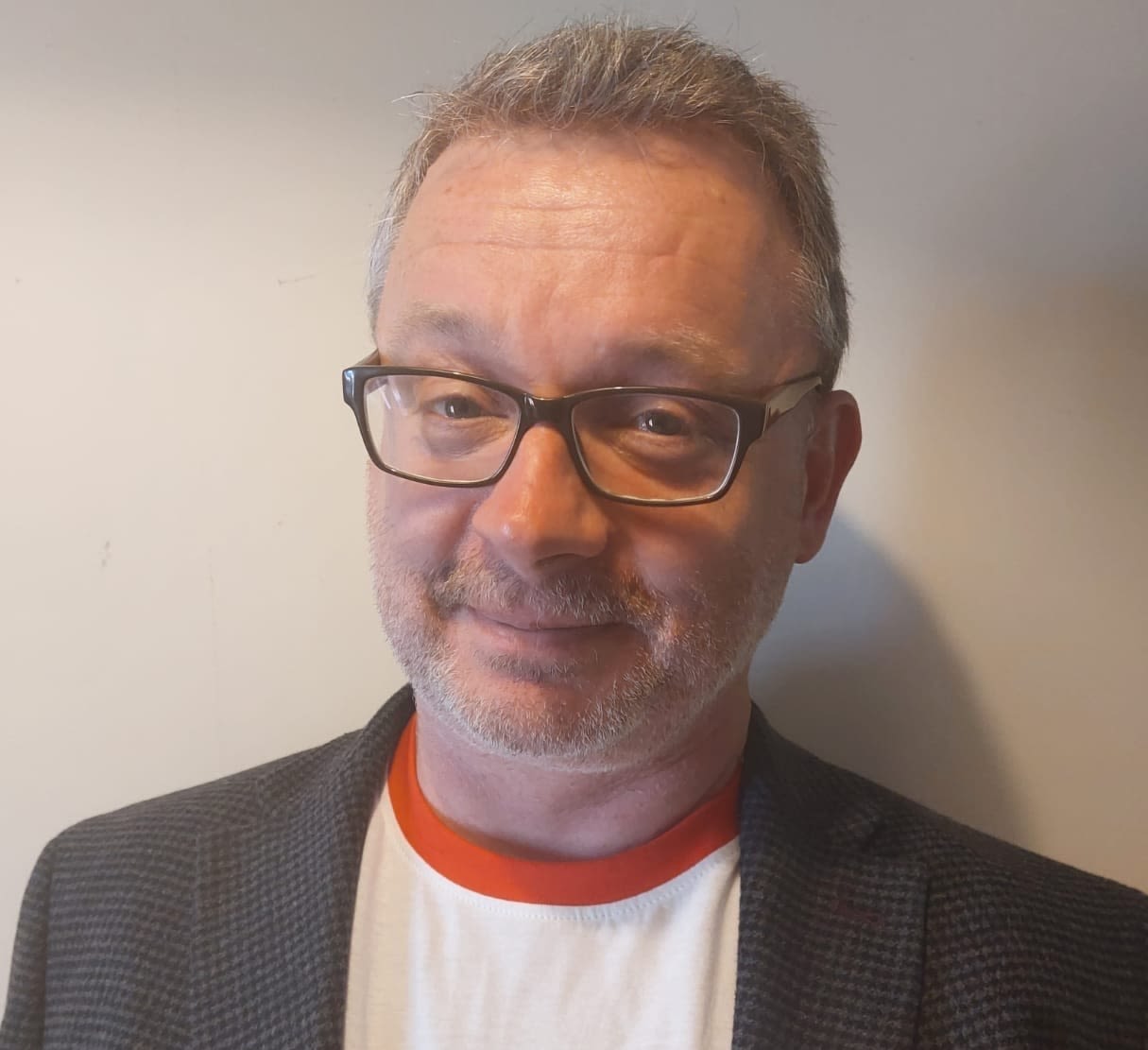

It was a drizzly afternoon when David Macphail's voice crackled through the computer.
David has written a lot of books. His two Viking series, following Thorfinn the Nicest and Velda the Awesomest Viking, have produced many editions and delighted children across the UK. Tapping into every child's love of adventure, swords, shields and Norse mythology, the books are an excellent blend of historical and fantastical fiction for young readers.
David has also written non-Viking children's fiction, including Yeti on the Loose and Top-Secret Grandad, both with his innate sense of accessibility and high-stakes which invites children to laugh without ever patronising them.
Our conversation lasted around half an hour, and David made charming, enlightening company. See below an elongated version of the interview, and continue reading for a transcription edited for clarity and length.

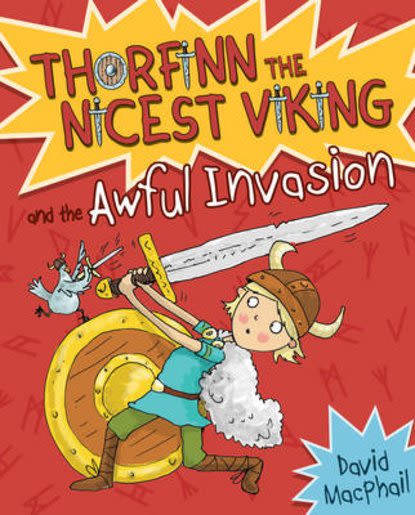
Image: Young Kelpies.
Image: Young Kelpies.
David Macphail – hello! Nice to see you
Hello! Nice to see you too Chris.
I bet it is. So, the Edinburgh Book Festival is back, and bigger than ever. Were you a regular fixture?
I don’t know about regular, but I’ve been there about four or five times over the years. And I always, always look forward to it. It’s a huge highlight. When I got my first kid’s book published, it was probably the first festival that invited me. It was just amazing. My daughter had just been born, and I remember being inside a tent. And the kids were going wild and applauding and laughing. Then I went outside and my new-born girl, my wife and my mum were there. It was the perfect moment, and I’ll never forget Edinburgh for that.
That is wonderful. Now with the mixture of online and in-person events, and its accessibility – let’s hope they can recreate that feeling. You’re known for Thorfinn: The Nicest Viking, your series for kids.
Yep, I’ve got Thorfinn behind me, and Velda. The two trouble-makers. [Thorfinn and Velda peek over David’s shoulders from large poster boards].
Was it always Vikings? To snare a child’s interest?
I always thought Vikings. You’re trying to get a hook as a writer, for a series or an individual book. To me, Vikings, especially in Britain are a really big thing. It’s taught in schools. Kids do them with the Anglo-Saxons. Even in America Vikings are a big thing. From a commercial point of view, they make sense. And from a writing point of view, they’re good fun. Not that I’d like to meet a Viking on a dark night. Or even on the beach.
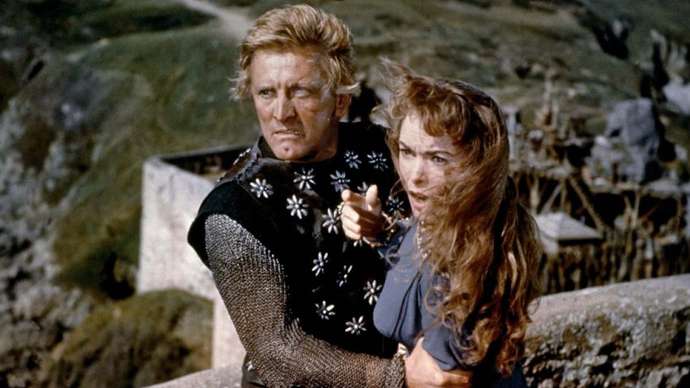
I hate when I’m on a beach and I see a Longboat and I think ‘here comes trouble.’ I completely agree with you. I’m from Leeds, and had York nearby, which was known as Jorvik. I grew up on a diet of films like The Vikings with Kirk Douglas.
Oh yes! I still sing the song. I must have watched that a thousand times when I was a kid.
"From a commercial point of view, [Vikings] make sense. And from a writing point of view, they’re good fun. Not that I’d like to meet a Viking on a dark night. Or even on the beach."

Would you say the transportive elements of literature, and the kinds of books you write for kids, have become more important in the past 18 months? To have that form of escapism in what they’re reading?
I do think it has been very important to have these escapes. A lot of people have wanted to escape from the pandemic and the stresses of that. And to escape from the house. For kids especially, historical fiction, fantasy and magical worlds that really does help.
I’ve been reading a lot of non-fiction for my escapism. I read Hellraisers by Robert Sellers, about Richard Harris and Richard Burton et al and the great boozers of the 60s.
I read that! Isn’t it fantastic? It’s so interesting that that’s non-fiction but it’s still an escape. For me, a lot of the best children’s literature is contemporary. Take for example Anthony McGowan, he wrote these four books, they’re quite reminiscent of Kes [Ken Loach's 1969 masterpiece]. And that’s another thing about non-fiction. I write that as well. And when I write it, I tend to get wrapped up in this different world. I’ve been busier during the pandemic, and even sitting here at my desk, I’ve been a whole world away. It’s a good thing.
It’s interesting which transportive aspects you look for in non-fiction. What sort of non-fiction are you writing?
I’ve written books on subject of migration – that’s quite challenging, because things are transforming so much. I’ve written about Alexander Selkirk, a Scottish sailor from way back in the 1700s who was a castaway. He became the inspiration for Robinson Crusoe. So just writing stuff like that requires me doing a whole lot of reading and getting wrapped up in texts some people won’t have read for several hundreds of years. Going back into the 1700s and finding out what went on onboard ships, it’s amazing. Fiction or non-fiction, there’s something to transport you.
Do you find that balance quite refreshing? To go back and forth from one to the other?
Yeah, well I’d like to say I take one project at a time. But because writing is my livelihood, I’m often working on three projects at once. And it’s good. Because you’re never gonna get bored. In the morning, I think: “I’ll try to be funny from 9 til 11, then be deadly serious about an serious migration subject from 11 til 1, and then something funny again for the afternoon”. Quite often I mix them up through the day.
Are you hopeful that busy pattern will continue for the foreseeable? Have you permanently changed in your systems?
Well one of the big things that happened because of the pandemic is I used to be everywhere. I was in a dozen different schools, up and down the country. A lot of children’s writers especially spend time around schools, festivals and libraries. That stopped like that [snaps his fingers]. It just got cancelled. It was sad – now it’s on virtual, and I still meet readers from the comfort of my study.
"You can’t fool kids! They’ll be very direct. I don’t know how many times I get the question – ‘Are you rich?!’ – but in all the schools I’ve engaged with virtually, we’ve been able to do it. It works."

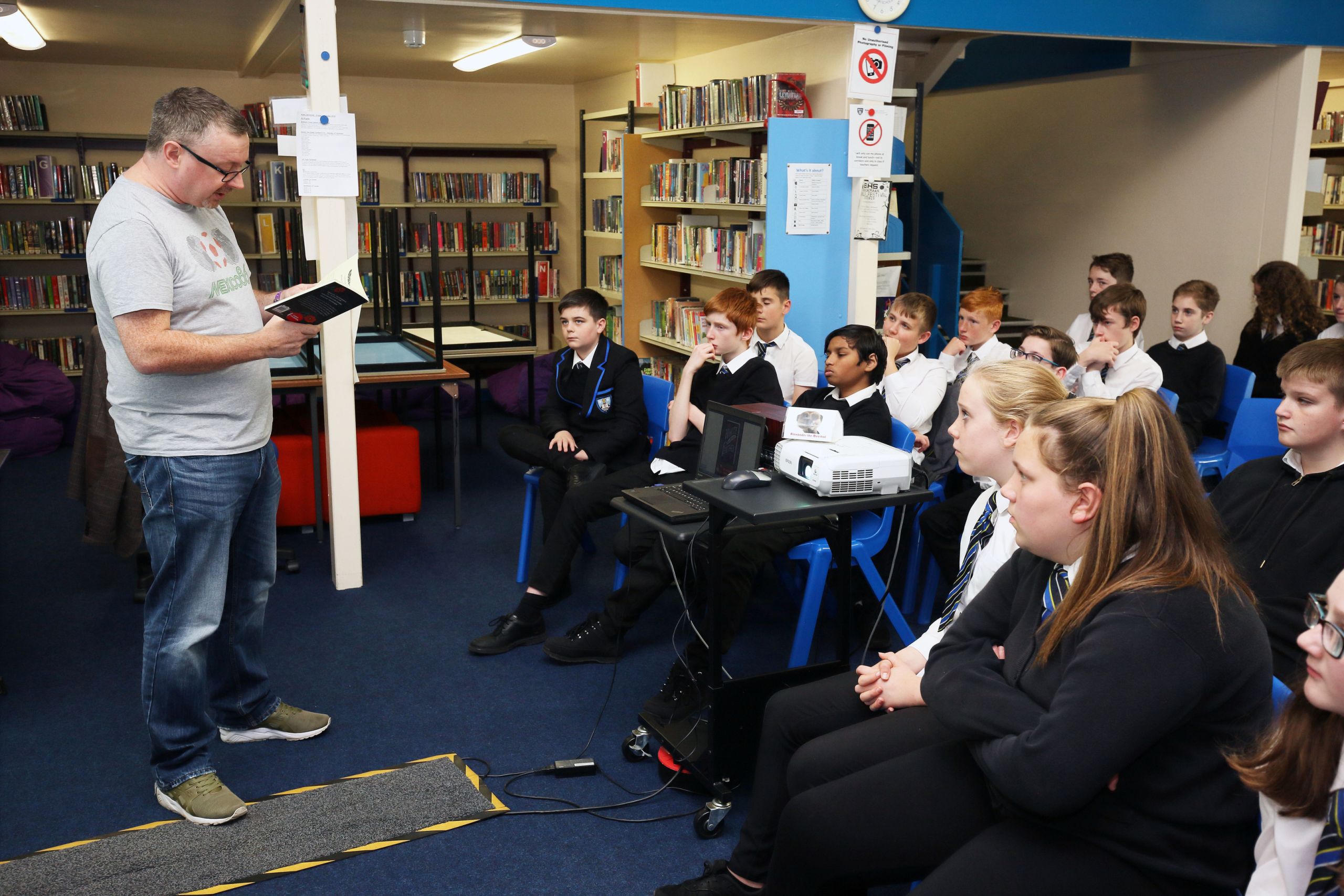
I imagine with children’s fiction, a lot comes from the immediate response, and seeing and hearing their reactions to it. Going from that supply and their reactions, to not – was that the most difficult part of the 18 months?
It was tricky, not meeting readers in person. I wasn’t really set up to do virtual events and meet children like this. I thought: “this won’t work”. Then I started doing a few, and you’d be surprised how much engagement there is. The events are shorter, which I think the EIBF have picked up on for their events this year. Q&A’s were a big part of what I did as well. You can’t fool kids! They’ll be very direct. I don’t know how many times I get the question – ‘Are you rich?!’ – but in all the schools I’ve engaged with virtually, we’ve been able to do it. It works.
Is a large draw, in historical fiction for children, getting kids invested in history?
Oh yeah. A lot of kids don’t need to be invested because they’re already invested, especially with the Vikings. Because they do the Vikings in school in the UK, it’s easier. And it’s a very easy pathway into historical fiction. There are lots of excellent books in the Viking and Anglo-Saxon age, which again kids do in school. But there are kids who aren’t naturally invested in it, and the thing for them is character. If you can access it through that, because the best books have characters who drive the story along, and a great story. That will snap anyone up who’s attuned.
Where next for Thorfinn and Velda?
I’m working my way through my favourite Norse myths. One I’m working on just now is a sequel to Velda the Awesomest Viking and the Voyage of Doom. It’s about giants and based on my favourite ever Norse legend. It’s about Thor, when he has to dress up as a bride, to get into a giant’s wedding.
That sounds fantastic.
David Macphail thank you so much. When can we see you at the EIBF?
I’m there on the 31st August, at 2pm. I’m online as well as in-person. Being in-person will be amazing. The hybridisation thing, it’s a really good idea. There’s people who at the best of times would never have made it to the Book Festival. So, to make your events accessible to them – that’s the way to go.
You can listen to our podcast on the EIBF, and hear us discuss David's interview, below:


 Built with Shorthand